

Itinerary timeline
Rio de Janeiro state extends well beyond its famous capital to Niterói, Petrópolis, Paraty, Ilha Grande, the Lakes Region, and mountain parks. For a first five-day visit, the city of Rio is already a complete itinerary; state extensions need extra nights.
Start with the route
Use one city base and organize days by zone: Centro and port, South Zone beaches, Tijuca/Corcovado, and a flexible weather day. Add Niterói as the only easy state extension in five days.
Rio de Janeiro at a glance
| Planning question | Useful answer |
|---|---|
| Region | Southeast Brazil |
| Easiest first base | Botafogo or Flamengo |
| Best second base | Copacabana or Ipanema |
| Route style | Urban beaches, dramatic landscapes, samba and art, modern and imperial history, coastal road trips, and travelers who enjoy combining city and nature. |
| Route decision | Niterói |
Choose a base
Base: Botafogo or Flamengo
Well connected for both Centro and the South Zone, with broad food options.
Base: Copacabana or Ipanema
Best for beach access and first-visit convenience, usually at a higher accommodation cost.
Base: Santa Teresa
Atmospheric and historic, but hill transport and late returns need more planning.
For a first trip, Botafogo or Flamengo and Copacabana or Ipanema make the clearest pair. Before splitting the stay, map the journey from Botafogo or Flamengo to Copacabana or Ipanema door to door: pickup point, luggage rules, expected arrival, and the return connection.
What to see
Centro and the port zone
The historic center, Museu do Amanhã, MAR, Valongo Wharf, and modern architecture tell several centuries of history. Select a daylight route and check current street conditions.
Corcovado and Tijuca
Christ the Redeemer sits within the Tijuca massif. Use official transport channels, monitor visibility, and pair the visit with one nearby activity rather than crossing the city repeatedly.
Sugarloaf and Urca
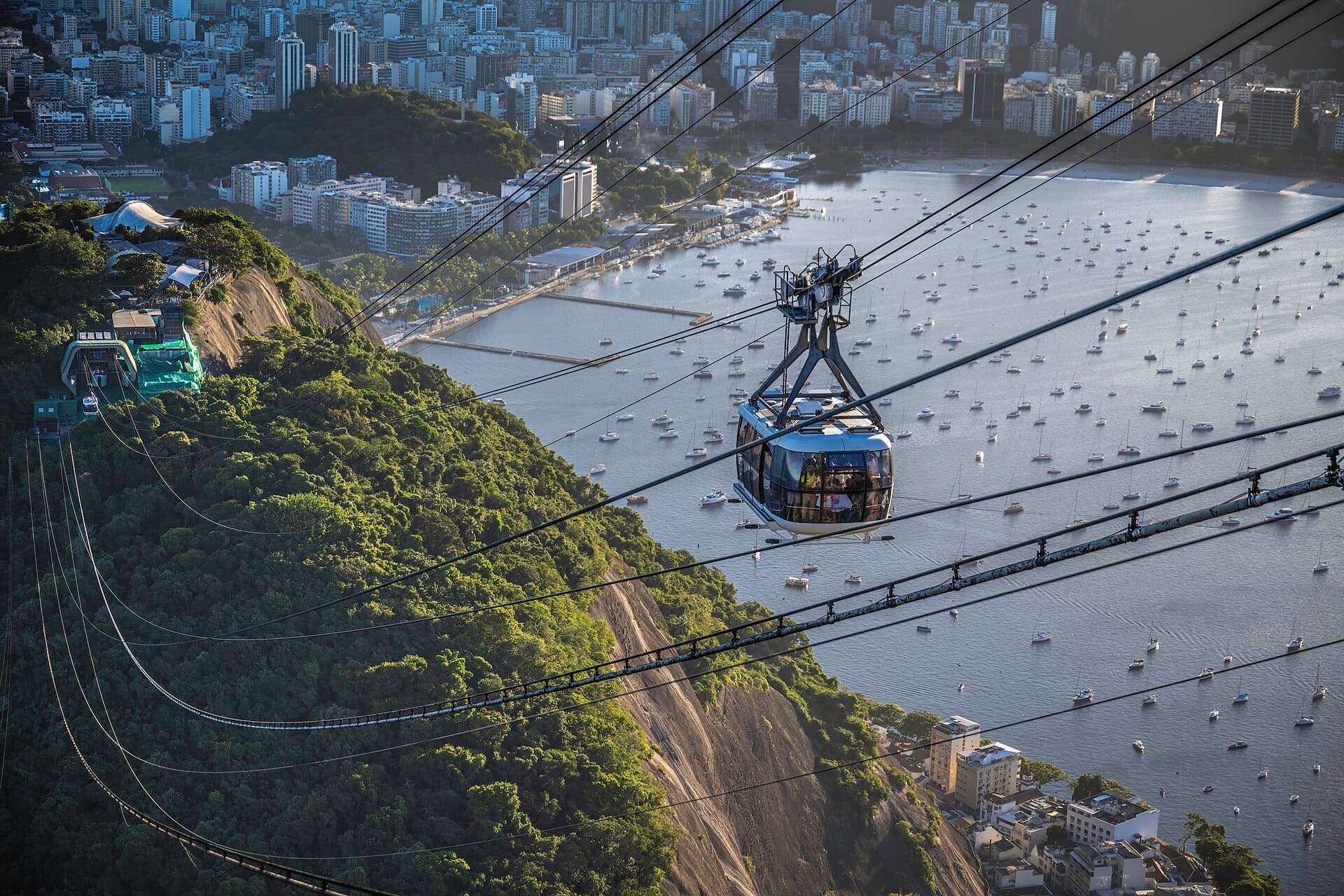
The cable-car ascent gives geographic context over Guanabara Bay. Urca itself is worth time before or after, and sunset capacity can sell out.
Niterói
Across the bay, Oscar Niemeyer architecture, MAC, and beaches provide a different view of Rio. Ferry and road return options should be checked in advance.
Five-day itinerary
The outline below uses Botafogo or Flamengo and Copacabana or Ipanema as its planning bases. Read the day sequence before adding Niterói; it shows whether that decision belongs inside these five days or needs a separate itinerary.
| Day | Base or focus |
|---|---|
| 1 | Centro and port history |
| 2 | Corcovado and a neighborhood |
| 3 | Beaches and Sugarloaf |
| 4 | Niterói or Tijuca nature |
| 5 | Weather buffer and local culture |
A late arrival in Botafogo or Flamengo should count as check-in rather than a sightseeing day. Protect the return from Copacabana or Ipanema instead of squeezing another stop into the final transfer.
Day 1: Centro and port history
Use the light rail and walking for a focused route through selected museums, Valongo Wharf, and historic streets. Visit in daylight and avoid trying to enter every institution.
Day 2: Corcovado and a neighborhood
Take official transport to Corcovado when visibility is promising, then spend the rest of the day in Jardim Botânico, Lagoa, or Santa Teresa according to the route.
Day 3: Beaches and Sugarloaf
Walk a section of Ipanema or Copacabana in the morning, rest during peak sun, and visit Urca and Sugarloaf later with a timed ticket.
Day 4: Niterói or Tijuca nature
Choose Niterói for architecture and bay views or a guided Tijuca Forest route for nature. Do not attempt both.
Day 5: Weather buffer and local culture
Use the final day for the major viewpoint weather displaced, a samba-history experience, a market, or a slow neighborhood lunch.
Extend the route without breaking it
If you add nights to Rio de Janeiro, use them to resolve the main route decision: Niterói. If the Rio de Janeiro day-by-day plan already covers that decision, slow the transfer and add recovery time; otherwise, give the extension its own arrival, useful day, and return.
Food and drink
Rio's strongest food experience is often a botequim: a casual bar where the identity lies in small snacks, draft beer, regulars, and neighborhood rhythm. Combine that with one serious Brazilian lunch, beach food, and a market. The state's mountain and coastal towns add entirely different traditions.
| Look for | What to know |
|---|---|
| Feijoada | The black-bean and pork dish is national, but Rio has a strong restaurant and samba-day tradition around it. Portions and accompaniments are substantial. |
| Filé à Oswaldo Aranha | Beef with fried garlic, rice, farofa, and Portuguese-style potatoes, associated with old Rio restaurants. |
| Bolinho de bacalhau | Salt-cod fritters served in botequins, best eaten hot with lime or house pepper sauce. |
| Galeto with farofa | Small grilled chicken with simple sides, a classic quick meal in traditional galeterias. |
| Biscoito de polvilho and mate | The beach pairing of crisp cassava-starch biscuits and cold mate tea is a genuine everyday snack. |
| Carioca botequim snacks | Pastéis, empadas, croquettes, and small plates make a bar crawl more revealing than one oversized dinner. |
| Paraty cachaça and coastal seafood | A state extension covers caiçara fish dishes and historic cachaça production; verify distillery provenance and do not drive after tasting. |
In Rio de Janeiro, restaurant names and prices age quickly. Use Feijoada, Filé à Oswaldo Aranha, and the other dishes above as menu reference points rather than fixed venue recommendations.
When to go
Rio can be hot and humid in any season. Summer brings stronger heat and storms; winter often has milder walking weather but cold fronts can affect beach days. Mountain visibility changes hour by hour, so keep Corcovado and Sugarloaf flexible.
Conditions can differ across Rio de Janeiro. Check the forecast for each travel day and verify current access, transport, and any booking or guide requirements for Niterói separately.
Getting around
Metro and light rail cover useful corridors, complemented by buses and app rides. Airport choice matters: Galeão and Santos Dumont have different transfer patterns. Keep phones and valuables discreet in crowded public spaces.
Calculate the full cost from Botafogo or Flamengo to Copacabana or Ipanema, including pickup, luggage, waiting time, and the return.
What to confirm before booking
- Current access, opening days, and guide requirements for Centro and the port zone.
- The complete transfer between Botafogo or Flamengo and Copacabana or Ipanema, including the return.
- Current access, transport, and any booking or guide requirements for Niterói.
- Road, river, tide, fire, and weather conditions that could change this Rio de Janeiro route.
How this guide was checked
StopOver built this Rio de Janeiro route from a structured destination profile. For Rio de Janeiro, automated checks cover formatting, repeated prose, commercial recommendations, and time-sensitive claims. This Rio de Janeiro article is neither a field report nor a source-checked guide. Access to Centro and the port zone remains on the freshness list. StopOver also monitors current access, transport, and any booking or guide requirements for Niterói. Confirm each item before booking.
Common questions
What is the most practical first base?
The five-day outline starts in Botafogo or Flamengo and treats Copacabana or Ipanema as its second base. Travelers focused on Copacabana or Ipanema should compare direct arrival and transfer options before adding a night in Botafogo or Flamengo.
What should a short trip leave out?
Remove the stop with the weakest connection to Botafogo or Flamengo and Copacabana or Ipanema. For a five-day Rio de Janeiro trip, test Niterói first and keep it only when the day-by-day transport and return buffer still work.